Migrate UniFi Controller to UniFi Cloud Key
 6 min read
To migrate a UniFi Controller to a Cloud Key, update the Cloud Key, download a .unf backup from the old controller under Settings > Control Plane > Backups, and restore it on the Cloud Key in the same place. Then point your devices to the Cloud Key with Override Inform Host and forget them on the old controller.
The UniFi Controller is now called the UniFi Network application, and current Cloud Keys run UniFi OS. I use Ubiquiti Hardware for a while now and am quite satisfied with their products. So far I use the UAC-Pro and the UAC-LR (Long Range) Access Points.
I just used their Unifi Controller Software on my own Computer to manage the devices. Now I decided to get a Cloud Key to have everything centralized, in case my Computer crashes while I’m Out Of Office.
Because I already got the Unifi Controller Software running, I need to migrate it over to the Cloud Key, so I can keep all the settings I have made previously.
I will walk you through each step.
Short version
- Set up the Cloud Key with the UniFi mobile app or its IP address in a browser, and update UniFi OS and the Network application.
- On the old controller, download a backup (
.unffile) from Settings > Control Plane > Backups. - On the Cloud Key, restore that file in Settings > Control Plane > Backups.
- On the old controller, enable Override Inform Host and enter the Cloud Key’s IP address.
- Wait until all devices show as online on the Cloud Key, then forget them on the old controller and shut it down.
Table of Contents
- Short version
- Cloud Key Initial Setup
- Option 1
- Option 2
- Backing Up the Old UniFi Controller and directing the Controller to the Cloud Key
- FAQ
- Why does the restore say the backup is from a newer version?
- Which backup file do I need to migrate to a Cloud Key?
- What do I do if a device shows as offline or "Managed by Another Console"?
- Can I migrate a controller with several sites to a Cloud Key?
Cloud Key Initial Setup
After you plugged your Cloud Key into your POE Switch Port or to a LAN Socket with a separate USB Power Adapter (NOT INCLUDED!), you have 2 ways of setting up the device.
The screenshots in this guide show the first-generation Cloud Key and the 2017 controller interface. Current Cloud Keys, such as the CloudKey Gen2 Plus, run UniFi OS, so the screens look different, but the steps are the same.
Option 1
Install the UniFi mobile app on iOS or Android. Connect your phone to the Cloud Key over WiFi or Bluetooth (stay within about 3 meters for Bluetooth) and follow the setup wizard. Ubiquiti recommends this method. The wizard also offers to sign in with a UI Account, which Ubiquiti strongly recommends. It gives you remote management through Site Manager at unifi.ui.com and automatic cloud backups.
In case you don’t want to use the mobile app, there is
Option 2
Find the IP Address of your CloudKey by checking your DHCP Server. The CloudKey automatically obtains an IP Address from your DHCP Server.
Enter the IP Address of your CloudKey into a Browser. You may see a certificate warning, which is normal, so proceed anyway. On a UniFi OS Cloud Key the setup wizard starts right away. On a first-generation Cloud Key, click on Configure.

On a first-generation Cloud Key, login with the credentials ubnt//ubnt. On a UniFi OS Cloud Key, you create the admin account in the setup wizard instead.
Go ahead and Change the Default Password first.
The Username changes to root automatically.
Next, click on Configuration and select the correct Timezone and give it a Static IP if you want.
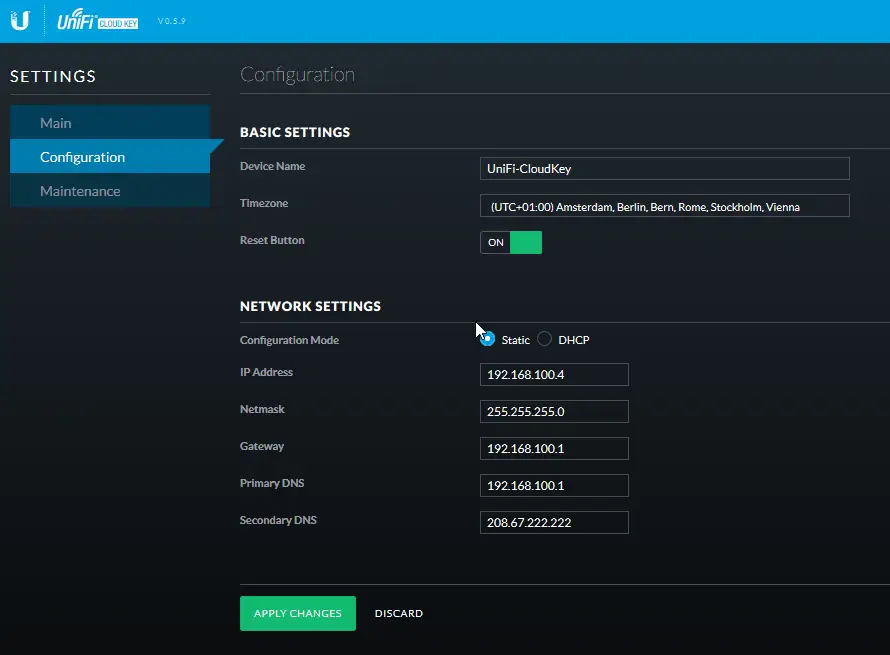
Reconnect to the device using the new IP Address.
Click on Configure to Configure the Cloud Key again and Navigate to Maintenance.
Click on Check for Update and Click on Update Now to ensure that you run the newest version.
On a UniFi OS Cloud Key, updates live in Settings > Control Plane > Updates: update both UniFi OS and the Network application there. Make sure the Network application on the Cloud Key is at least as new as the one on your old controller, otherwise the restore fails with a message that the backup is from a newer version.

That’s it for the basic setup of our Cloud Key.
Now we need to Login to our OLD UniFi Controller, which is installed on my computer at the moment.
Backing Up the Old UniFi Controller and directing the Controller to the Cloud Key
After logging in to your OLD UniFi Controller, first copy the device SSH username and password from Devices > Device Updates & Settings > Device SSH Settings. Ubiquiti recommends this in case a device needs help connecting to the new Cloud Key later.
The screenshots below show the older controller interface, where the inform host setting was under Settings / Controller and backups were under Maintenance. In the current Network application, both steps work like this:
- Navigate to Settings > Control Plane > Backups and download a backup. This gives you a
.unffile. - Restore that file on the Cloud Key, as shown at the end of this section.
- Once the restore is complete, go back to the old controller, enable the Override Inform Host toggle and enter the IP ADDRESS OF YOUR CLOUD KEY. This tells your devices where they should connect.
- Click on Apply Changes.

In the old interface, Navigate to Maintenance and Download a Backup. It depends on you how far back you want your Data to be retained. I choose 180 Days.
Click on Download Backup.
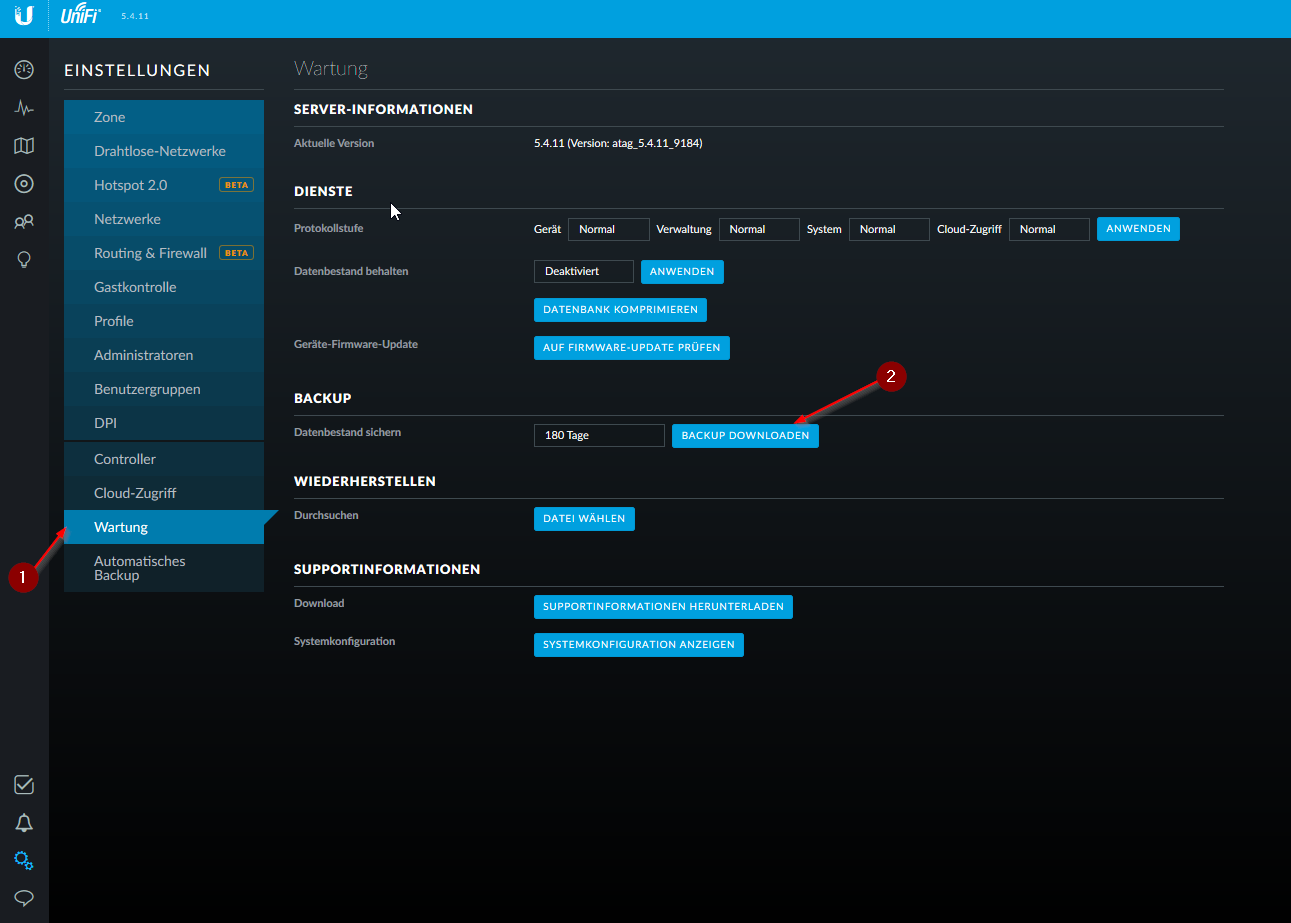
Now Navigate back to your Cloud Key IP Address in your Browser and this time click on Manage on your Controller.
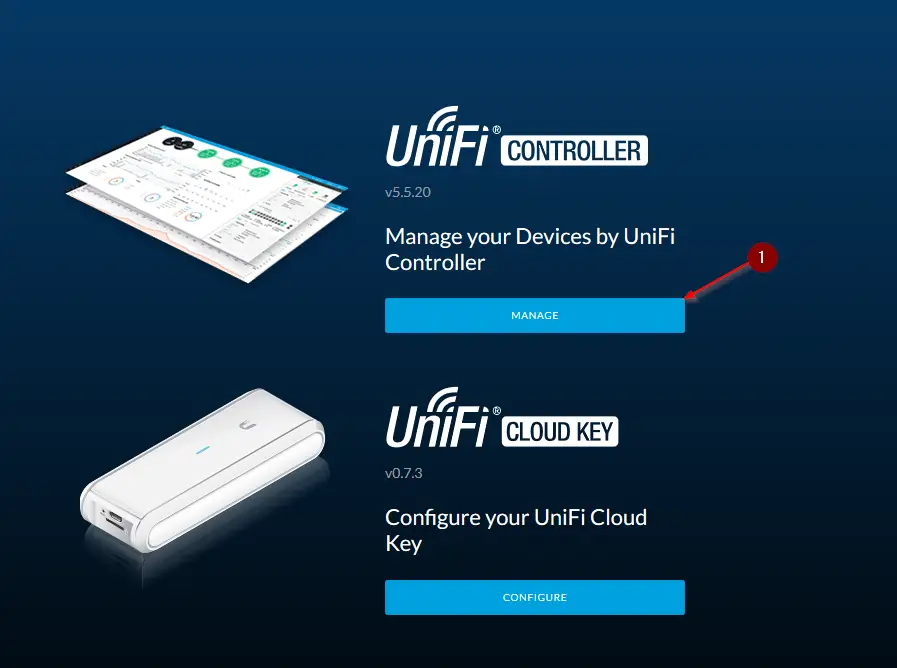
In the Wizard select your Time Zone again and now choose “Restore from previous Backup” and choose the file we just downloaded. On a UniFi OS Cloud Key, finish the setup first, then open the Network application and restore the file in Settings > Control Plane > Backups.
Wait until all devices show as online on the Cloud Key. Then select each device in the old controller and click Forget, so they don’t reconnect to it, and shut the old controller down.
That’s it! Now everything should be running on your new Cloud Key Controller.
FAQ
Why does the restore say the backup is from a newer version?
The Network application on the Cloud Key is older than the one that made the backup. Update the Cloud Key in Settings > Control Plane > Updates until its Network application is at least the same version, then restore the .unf file again. Ubiquiti’s migration guide lists this as the first step.
Which backup file do I need to migrate to a Cloud Key?
You need the Network backup, a .unf file, from Settings > Control Plane > Backups on the old controller. The System Config Backup is for moving between UniFi OS consoles, for example from one Cloud Key to a newer one. On a self-hosted controller on Windows, macOS or Linux, the Network backup is the one you download.
What do I do if a device shows as offline or “Managed by Another Console”?
Make sure Override Inform Host is enabled on the old controller with the Cloud Key’s IP address, and give the device a few minutes to reconnect. If it still doesn’t come online, factory reset the device and adopt it again on the Cloud Key. The device SSH credentials you copied from the old controller help if you need to log in to a device.
Can I migrate a controller with several sites to a Cloud Key?
A full backup restore is meant for a single site. To move individual sites, use Export Site in Settings > System > Site Management on the old controller, then Import Site from the site switcher on the Cloud Key. If you don’t see a site switcher, enable Multi-Site Management in the same Site Management settings.
I really love how simple everything is with UniFi. Can highly recommend their products.
10 thoughts on “Migrate UniFi Controller to UniFi Cloud Key”
Comments are closed. I keep the discussion here because the answers still help.
More posts
All SysAdmin


Thanks for the process! Worked great!
Thanks for the tips and enjoy your coffee-pizza!
Thank you so much for that!!
Wow! Works flawlessly! I made the same mistake but config'ing on the controller software rather than the cloud key. THIS worked in less than 5 minutes. Logins remotely from the unifi site work perfectly. Thanks a million
Thanks for leaving a comment, Dayne! And thanks for the Pizzas! :)
jep, straight on, perfect
Thank you for the clear guide!
Thanks for writing up this guide - it was very helpful!
The only thing that went wrong for me was that I didn't notice but the "Update Now" button only updated the cloud key firmware, not the controller firmware. Then, when I tried to restore the backup it complained that it was a backup from a newer version of the controller software. To fix it I logged back into the cloud key, did an Update on the Unifi component, and next time it worked a charm. :)
thanks so much, i do it so easy
Thanks, worked perfectly.